
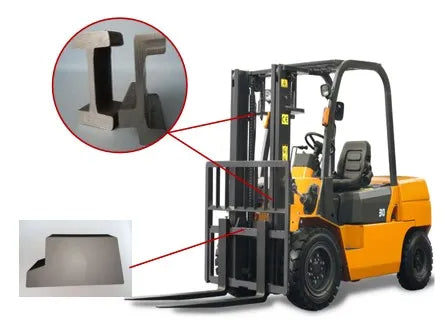
Forklift OEMs use custom steel profiles when standard channels do not match the mast, carriage or guide geometry. The value comes from aligning the rolled section with the intended component route, not from broad performance claims without test data.
Closer-to-Final Section Geometry
A profile developed around the component can reduce unnecessary material and simplify selected downstream operations. The achievable benefit depends on the final drawing, tooling and production volume.
Control of Functional Interfaces
Roller paths, guide faces, radii and connection areas can be identified as controlled features. This helps the supplier build an inspection plan around dimensions that matter to assembly.
Integrated Processing Review
Cut length, drilling, machining, welding preparation and surface-treatment preparation can be considered together with the rolled profile. Each operation should remain traceable to the drawing revision.
A Better RFQ Comparison
When all suppliers receive the same drawing, material standard, inspection requirements and annual demand, the buyer can compare tooling, scope, documentation and commercial terms on a consistent basis.
Information to Include in an RFQ
- 2D or 3D section drawing
- Steel grade and applicable standard
- Critical dimensions and tolerances
- Cut length and downstream processing
- Trial quantity, annual demand and destination
Send your drawing for a feasibility review. Material, tooling, inspection scope, minimum order quantity and lead time are confirmed after technical review.