
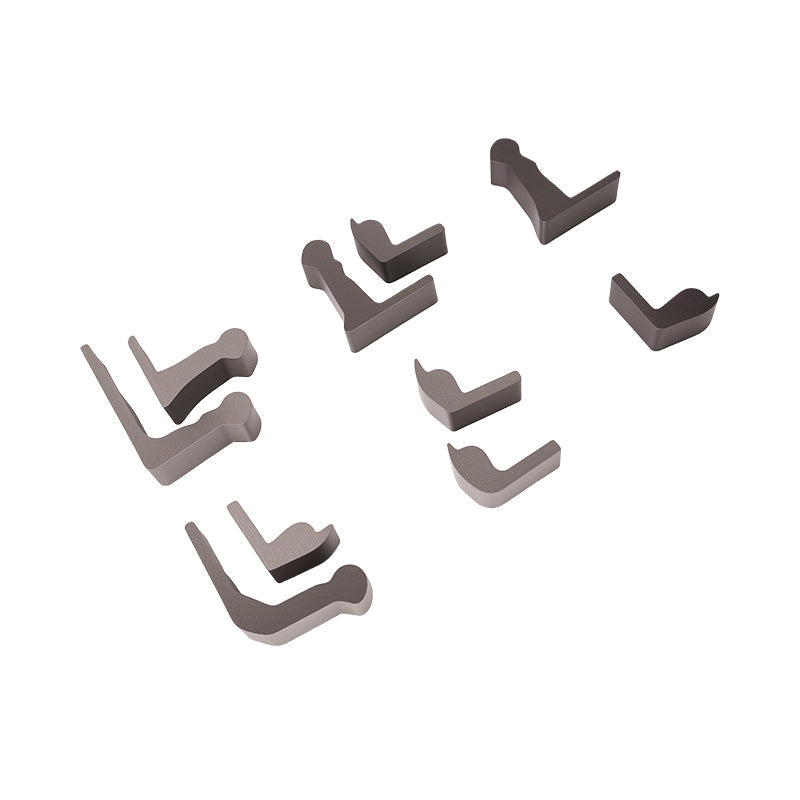
Automotive steel profiles are selected around a specific component and production route. Hinge blanks, support sections and structural components may require different materials, section shapes and downstream operations. A useful enquiry therefore starts with the part drawing and its functional interfaces.
Typical Component Groups
- Door, hood and tailgate hinge profile blanks
- Cross-members and local reinforcement sections
- Load-bearing brackets and support profiles
- Custom sections for commercial and special-purpose vehicles
From Drawing to Profile
The section should be reviewed for hot-rolling feasibility, material flow, corner radii, machining allowance and cut length. Features that cannot be controlled in rolling may need machining, drilling, welding or another downstream operation. The quotation should separate rolled-profile requirements from finished-component requirements.
Material and Quality Planning
Existing Huaneng catalogue content references grades such as Q235, Q345, Q355, S355, 20Mn and 45#. These are examples, not automatic substitutes. The customer specification determines the final grade, delivery condition, testing and traceability.
What to Compare Between Suppliers
- Ability to explain manufacturability limits
- Control plan for critical dimensions
- Sample and approval sequence
- Clarity of material and inspection documents
- Packaging suitable for the agreed delivery condition
Information to Include in an RFQ
- 2D or 3D section drawing
- Steel grade and applicable standard
- Critical dimensions and tolerances
- Cut length and downstream processing
- Trial quantity, annual demand and destination
Send your drawing for a feasibility review. Material, tooling, inspection scope, minimum order quantity and lead time are confirmed after technical review.