
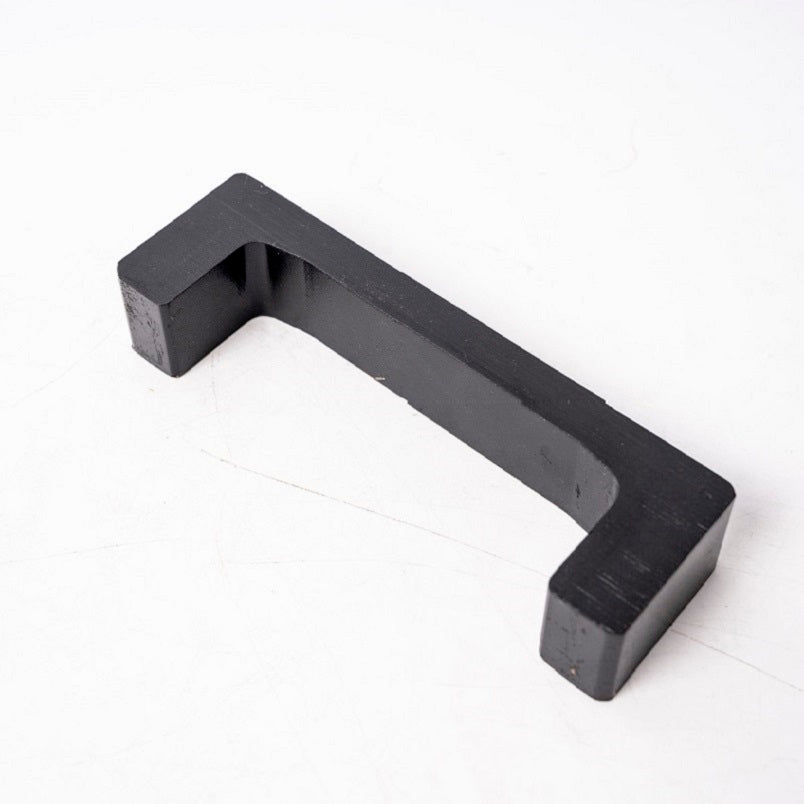
A forklift mast guide rail must match the roller path, mating components and assembly geometry defined by the forklift manufacturer. Buyers should therefore specify the steel profile from a controlled drawing rather than relying only on a general channel designation.
What Defines a Forklift Mast Guide-Rail Profile?
The section normally combines structural and guiding functions. The web, flanges, opening, internal radii and roller-contact faces influence how the profile fits into the mast or carriage assembly. Two profiles that look similar in a catalogue may not be interchangeable when their functional surfaces or joining features differ.
Geometry That Should Be Controlled
- Channel opening and flange position
- Web and flange thickness
- Internal radii and transition areas
- Roller-contact or guide surfaces
- Straightness, twist and local deformation
- Cut length and end preparation
The drawing should identify functional dimensions separately from general section dimensions. This helps the supplier build an inspection plan around the features that affect assembly and movement.
Roller and Bearing Interfaces
Rollers, bearings and mast profiles operate as one system. Roller diameter, contact geometry, running clearance and alignment must be checked against the customer assembly. A profile supplier can manufacture and inspect the agreed section, but final compatibility must be confirmed using the mating-component data and sample approval process.
Material and Manufacturing Route
Material grade, delivery condition and forming route should be stated in the project documentation. Hot-rolled and other custom-section routes serve different geometries and production requirements. The suitable route depends on section thickness, shape, tolerance, downstream processing and planned quantity.
Inspection Requirements
Inspection should follow the customer drawing and agreed datums. Typical checks may cover section dimensions, straightness, twist, surface condition, cut length and material documentation. Buyers should state whether they require dimensional reports, material certificates, mechanical-property records or coordinated third-party inspection.
Information to Include in an RFQ
- 2D or 3D cross-section drawing
- Steel grade and applicable standard
- Critical dimensions, tolerances and datums
- Roller-contact and assembly interfaces
- Cut length and downstream processing
- Trial quantity, annual demand and destination
Review Huaneng’s hot-rolled C-channel profile for forklift mast rails and C- and J-type forklift mast profiles. Send the drawing and project requirements through the RFQ contact page for a manufacturability review.